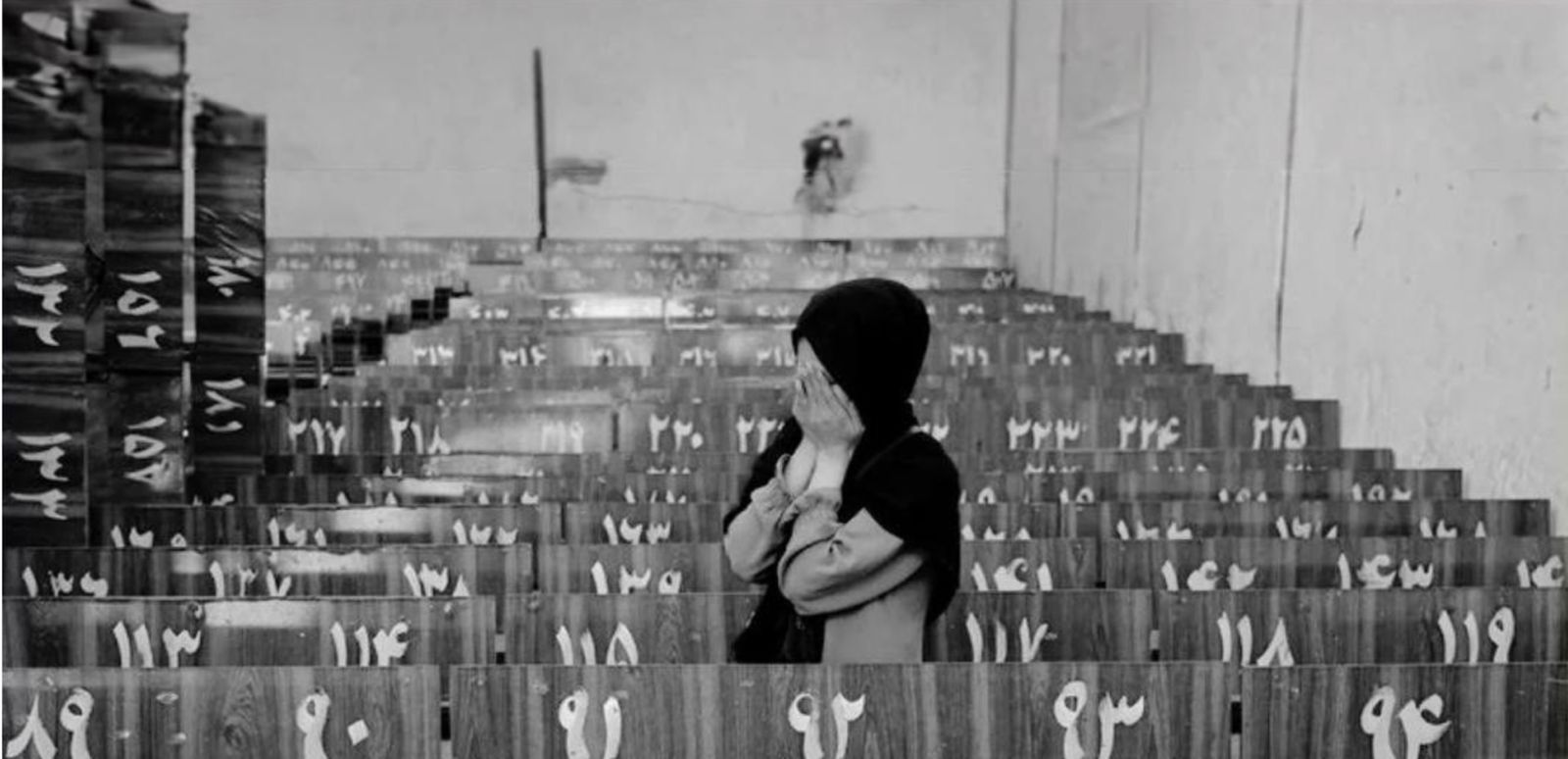
I don’t know. I truly don’t know where to begin. My mind is tangled. Maybe I should start from that night
when my father looked at my mother with sorrowful eyes. I had never seen so much sadness on his face
all at once. He looked at her as if this trip wasn’t the start of his mission, but the end of something
important.
At night, my father used to tell us stories from his military days to help us sleep. Rayhanah,
four years older than me, always listened until the end and asked questions.
Ali, six, fell asleep first. Me, a fourteen-year-old girl who loved drawing, always imagined the characters
of my father’s stories. But that night ended all stories, all storytelling nights.
My mother entered. She picked up the pink clay bowl her father had gifted her at her wedding and one of
my green floral scarves, wrapped around food, and walked toward my father. She said only,
“Take care.”
She handed him the bowl and stepped back. He leaned out the window for the last time and looked at
Rayhanah: “My dear, I leave these two in your care.”
My father, a recently retired commander, was now responsible for transporting weapons because the
Taliban had reached the borders. My mother was afraid, rightly so; this was a road filled with worry and
fear.
That day, an explosion deafened us for minutes, and the ringing stayed for years. Windows shattered. At
7:30 Friday morning, my mother called: “Roya, wake up, eat breakfast, there’s much to do.”
Embroidery was my only hobby; three years had passed since my father left, and we had no news. My
mother earned everything through it.
School was unknown to me; girls weren’t allowed in our area. But that day everything changed. My
mother said: “You three must take your father’s revenge.”
But how? Ali was small, Rayhanah and I were girls. My mother said something that stayed with me
forever: “With studying and your pens, show the oppressors they killed your father, but you survived.”
Safety was still needed.
Rayhanah had gone to the only girls’ course in West Kabul: Kaj. Who knew this education would become
preparation for dying? They were ready to die.
Noise erupted; an explosion had struck the course. My mother, barefoot, handed Ali to me. I closed the
door and ran: “I am going to find Rayhanah, watch the house.”
It was a heavy responsibility for a boy his age.
We reached, but I wish we hadn’t. I wish time turned two hours back, when Rayhanah asked my mom for
100 Afghanis for a new math book. She had gone. Red—the worst color I’ve ever seen—blood like a
river, torn bodies scattered. Rayhanah’s ID was cut in half; only her name was visible. Books with
colorful, meaningful stickers lay on the ground. My mother screamed. My sister had lost an eye,
struggling to survive. She had dreamed of being a doctor but had to save herself first.
Two months passed. Every morning we woke with my mother’s tears, every night we slept with them. Her
hatred stayed fresh, pain growing. We placed Rayhanah in the grave; her left eye was hollow, another
bullet tore her heart.
Everything worsened. I was the oldest after Rayhanah, but taking her responsibilities felt like drowning in
guilt. My uncle, Ahmad, said we had no time; we had to leave. We packed, but my mother couldn’t detach
herself: “Whom do I leave her to?” Then, migration.
We went to Iran. Houses were narrow and dark; at night I drew portraits under moonlight. People called
us terrorists, spies. We didn’t belong, so we returned. On the way back, Colonel James forced my mother
to let Ali go to London with him. Mother agreed; it was her hardest decision.
Migration became routine, but returning home was harder. My mom spent her final days beside me. Uncle
Ahmad, returning, lost his eyes to a bullet; he had been a close friend of my father’s.
I still feel the weight of those moments. Why me? Why witness all this? I lost everything, and my hands
could do nothing. Childhood crumbled, the bakery walked with my father, his promise to take me to a
gallery if he liked my drawings, rooftop games with Ali, Rayhanah reporting to our mom. I wish I had
stayed a child. Growing up was not a good dream.
Now I am 77. Kabul is quiet, but I remain in the dusty alley across from our house, counting until others
hide, and I can find them.
I realized I had a reason, chosen to carry my story to God, to tell Him I survived. I fear losing my memory
and these moments. I write so that one day God reads my story and knows this is the same little girl who
looked at the sky every night and said: “There are many stars, but I can count to ten.”
A voice inside me says: You were destined, destined to carry these moments. I had blessings some never
had: family, life beside them. I am grateful.
My dad said: “Roya, one day you will become the greatest artist in the world.”
I did, not for the outside world, but for my inner one, my inner dream. I feel him beside me, holding my
hand, encouraging me.
Do not lose your strength. No state remains forever. The best worship is waiting for relief from hardship.
Days move; nights carry new possibilities. The unseen world is hidden, and God, the Wise, acts daily.
Know that after hardship comes ease.
 N
N